The early childhood sector is facing a watershed moment. Documentation demands keep rising, workforce pressures aren't easing, and traditional solutions aren't addressing the root causes. Meanwhile, AI has reached a technological turning point that could fundamentally reshape how ECE works.
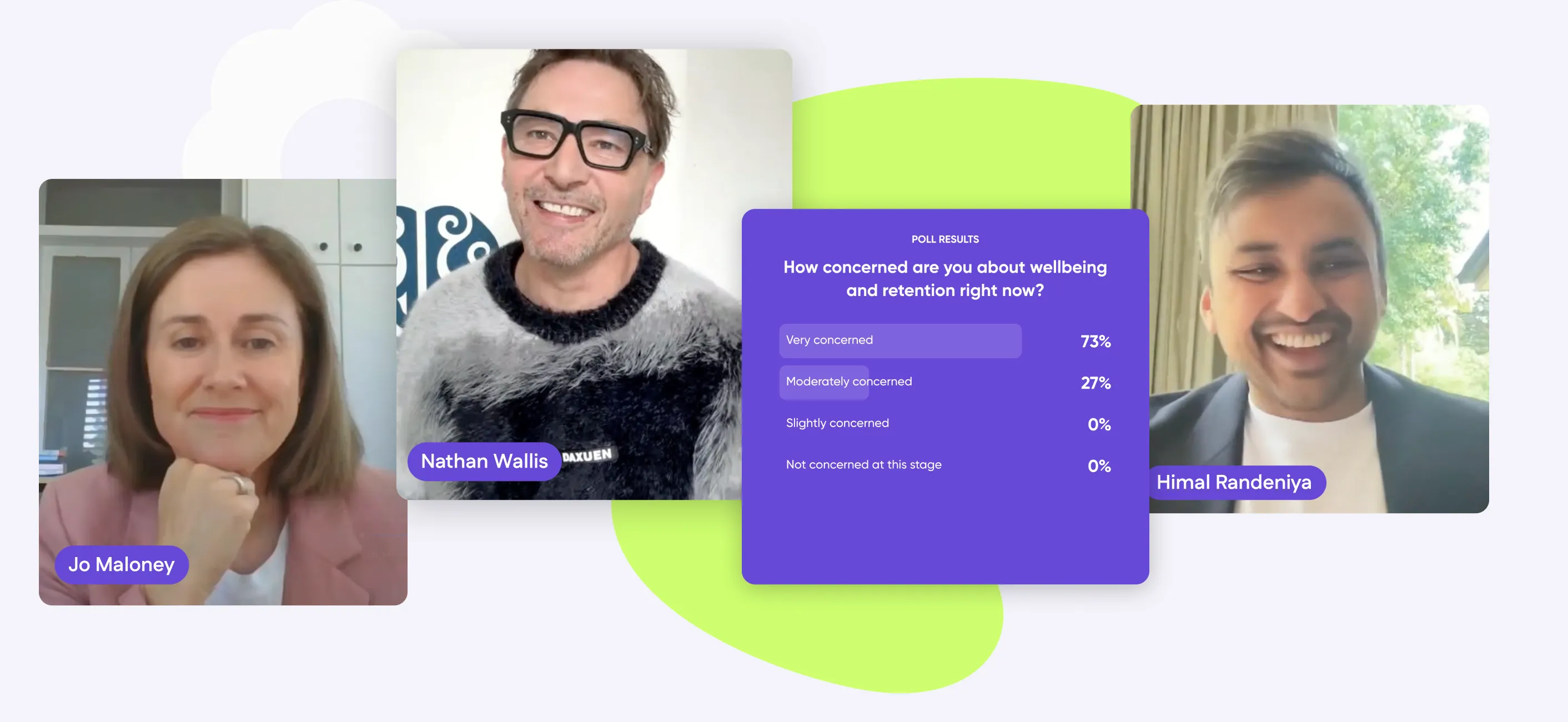
Recently, Anya Bonan (Chief of Staff) and Hayden Rolls (Head of Partnerships) at Mana explored what AI means for early childhood education, and how educators and leaders can prepare for the changes ahead.
Why traditional approaches are no longer keeping up
If we're honest with ourselves, the solutions we've relied on for the last decade haven't shifted the dial on the sector's biggest challenges.
When it comes to mounting workload pressures, we've given educators more non-contact time or pared back documentation requirements. For educator skill gaps, we've invested in training programs and learning management systems. And for family engagement, we've increased photo sharing and instant updates.
Yet these incremental fixes haven't solved the underlying problems. Documentation loads continue to grow. Educators still feel under pressure. And families often receive surface-level communication that doesn't build trust or reflect professional practice.
The reality is that these challenges are leading to missed moments that shape children's futures. As a sector, we know that getting the early years right is where everything flows from.
What is AI and how does it actually work?
AI isn't new. If you've used autocorrect on your phone, spell check in Word, or gotten Netflix recommendations, you've already been using AI. It's everywhere in our daily lives.
At its core, AI works through probability and pattern recognition. Think about it this way: if someone says "I'm really hungry, I want to go down to the corner store and get some fish and..." you'd probably say "chips" because you've seen that pattern before.
That's essentially how AI works. Tools like ChatGPT scrape data from across the web to predict the most probable answer to your question. But here's where it gets interesting for education.
The power of fine-tuning
While general AI tools are great for broad questions, they're not ideal for specialist work. You wouldn't trust ChatGPT to tell you how to perform open-heart surgery because the signal's too blurry.
This is where fine-tuning comes in. When you train AI on a specific set of data relevant to an industry, then ask it questions, you get much better results. Imagine training it on all the best videos of leading heart surgeons, the latest literature, and research. Then asking how to perform surgery. You'd trust that signal much more.
This concept of having little expert coaches in your pocket is what the future will look like across all sectors, including early childhood education.
How AI could transform ECE workflows
So what does this mean practically for early childhood education?
Removing manual work to free up time with children
AI can handle the administrative burden that takes educators away from what matters most. Educational leaders often spend hours reviewing spelling and grammar instead of being on the floor doing peer-to-peer mentoring. Educators spend hours writing documents instead of engaging with children.
In our philosophy, educators don't need to be Shakespeares when it comes to writing documents, but they do need to be critical thinkers who spend quality time with children.
Providing a coach in everyone's pocket
With skill gaps and training being harder than ever, AI can be designed as a thought partner. It can prompt you to see things you might have missed, notice patterns in a child's development, and provide real-time coaching support.
Instead of finding time to complete microlearning modules, imagine having something by your side that you can interact with throughout your day.
Surfacing meaningful child development insights
Rather than focusing on photo volume, AI can help surface child development insights and help parents better understand learning. It can recommend ways families can extend learning at home and demonstrate why early childhood educators are professionals.
Addressing the biggest concerns
Will it sound like me?
This concern isn't new in human history. All famous presidents and prime ministers have had speechwriters. Martin Luther King's "I Have a Dream" speech was crafted with two speechwriters, Clarence B. Jones and Stephen Leviathen, that most people have never heard of.
King did the critical thinking. The speechwriters smoothed it out and workshopped it. But he owned those final words.
The same principle applies here. Use AI as a speechwriter, as a thought partner, as a back pocket mentor. But you've got to own your words.
Will AI replace educators?
The research is clear: the biggest factor in effective psychology interventions is something called the therapeutic alliance, which is simply the fact that there's another human looking you in the eye. It doesn't matter what specific technique is used. It's the human-to-human connection.
Education is no different. This career will be augmented by AI, not replaced. The focus is on revolutionising practices so educators can spend more quality human-to-human time with children. That's a future to be excited about.
How long does it take to see the benefits of AI?
A 2024 Microsoft study of co-pilot users found something fascinating: saving just 11 minutes per day was enough for people to feel AI was genuinely helpful. After 11 weeks of regular usage, even the most skeptical users shifted their mindset.
Once they moved past this tipping point, they experienced less admin stress, better work-life balance, and more enjoyment of their work. It's those small habit formations that add up to changing hearts and minds.
What should you look for when choosing AI tools for early childhood?
Not all AI is created equal. Here's what matters when evaluating AI solutions for early childhood education.
What's the difference between AI-native and bolt-on AI?
Some providers are bolting AI onto legacy systems. This might provide small efficiencies, but it's just adding AI to an existing process that may not be fit for purpose.
The future lies in AI-native systems, where AI intelligence is at the core and reimagining the workflow from the ground up. Think about the difference between using spell check on a document versus having a video call with an AI tutor who corrects your grammar in real-time and adjusts their teaching approach based on your learning style.
Sector expertise matters
Building effective AI for a specific sector requires technical expertise combined with deep sector knowledge and vision. Look for providers whose teams include both technical experts and people who have walked in your shoes and understand the day-to-day reality of ECE.
Trust and security must be at the forefront
With AI, more data is being put online, and as parents consent to that data on behalf of their children, it's critical that we safeguard it properly.
Look for certifications like SOC 2 attestation, ISO 27001, and ISO 42001. Ask whether the tool collects only the bare minimum child information needed. Ensure your organization retains control of the data and that it's never used to train external AI models.
Most importantly, check that the AI tool supports your team's judgment rather than replacing it.
Creating a cross-generational learning opportunity
One common assumption is that younger educators will embrace AI while older, more experienced educators will struggle. But age shouldn't be a barrier for using AI.
In fact, AI creates opportunities for teams to come together and learn something new, blending the deep teaching experience that senior educators possess with the digital savviness that younger educators bring.
Recent studies show that older Australians are using digital services more than ever before, with clear growth in digital literacy. Online banking, shopping, streaming, and telehealth have all driven behavioral shifts that demonstrate increased capability to navigate modern digital tools.
Plus, AI accessibility features like voice input can be particularly helpful for people with literacy, vision, or mobility challenges, making these tools more inclusive than traditional software.
Where does the sector sit on the adoption curve?
Every new technology follows an adoption curve, from early innovators to early adopters to the early majority, late majority, and finally laggards. This pattern holds true because it reflects how humans navigate change.
So where is the ECE sector now? The New South Wales government recently released EduChat, an AI tool that helps students with essay writing. When government, historically a slow mover, is implementing AI tools, we're clearly past the innovator stage.
For 2026, if you're not thinking about how to leverage these technologies effectively, there's a risk of slipping into the "what happened?" category. The technology is moving fast, and the opportunity is now to explore, learn, and prepare your teams.
Moving forward with intention
This isn't about rushing to adopt every new tool. It's about understanding the landscape, asking good questions, and having meaningful conversations with your team about how AI could support your work.
Start small. Experiment safely. Build confidence through practice, not perfection. Learning with AI is different from traditional software rollouts because the learning happens by doing.
Most importantly, remember that technology enables transformation, but it's people who drive outcomes home. As you explore AI's potential, approach it with curiosity, ask lots of questions, and keep your focus on what matters most: creating the conditions for children to thrive.
The future of early childhood education is still deeply human. AI is simply a tool to help us get back to what we do best.